
 当前位置:首页 > 学术研究 > 学术活动
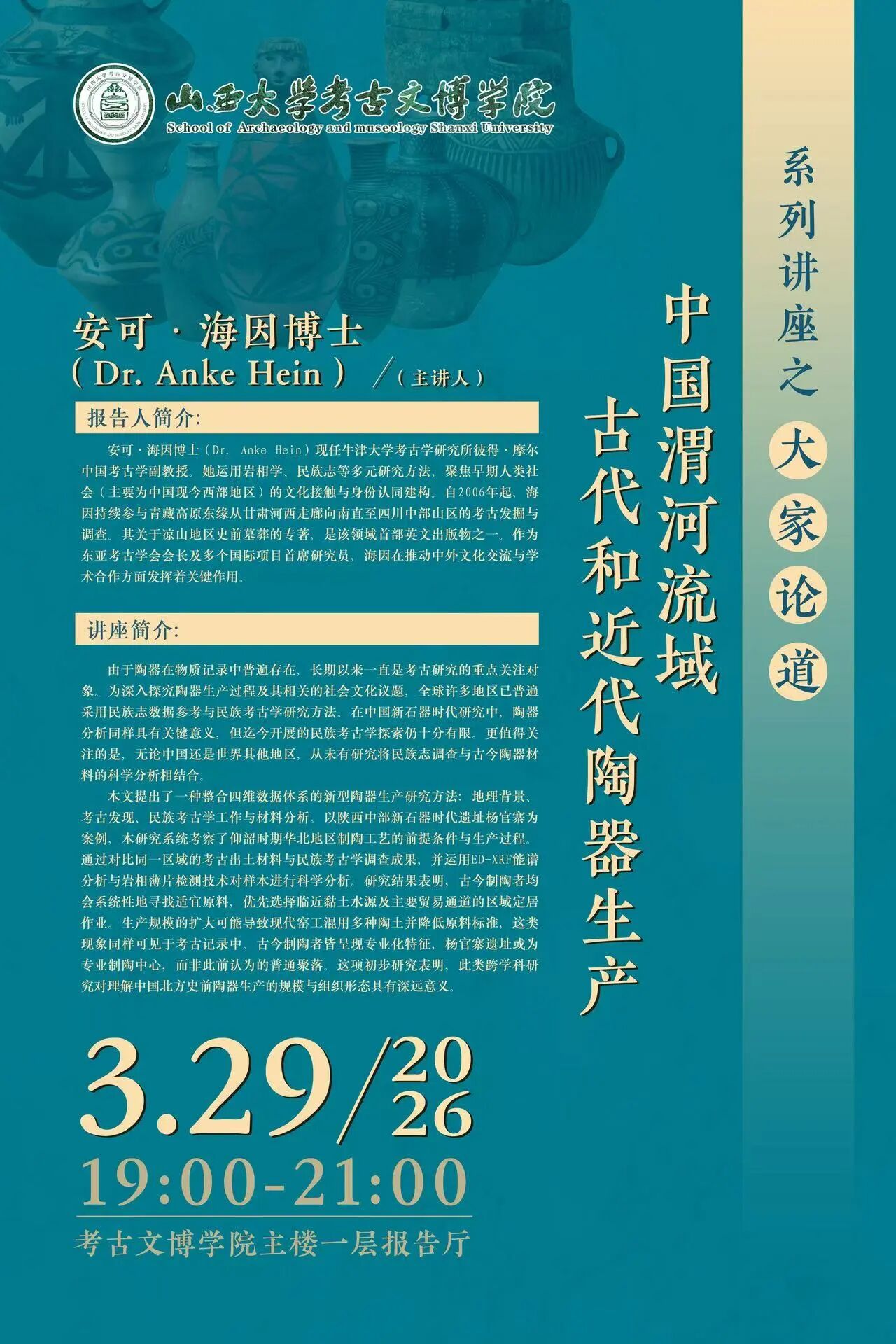
讲座题目:中国渭河流域古代和近代陶器生产
主讲人:Anke Hein(安可)
讲座时间:2026年3月29日19:00-21:00
讲座地点:考古文博学院主楼一层120报告厅
讲座内容
由于陶器在物质记录中普遍存在,长期以来一直是考古研究的重点关注对象。为深入探究陶器生产过程及其相关的社会文化议题,全球许多地区已普遍采用民族志数据参考与民族考古学研究方法。在中国新石器时代研究中,陶器分析同样具有关键意义,但迄今开展的民族考古学探索仍十分有限。更值得关注的是,无论中国还是世界其他地区,从未有研究将民族志调查与古今陶器材料的科学分析相结合。
本文提出了一种整合四维数据体系的新型陶器生产研究方法:地理背景、考古发现、民族考古学工作与材料分析。以陕西中部新石器时代遗址杨官寨为案例,本研究系统考察了仰韶时期华北地区制陶工艺的前提条件与生产过程。通过对比同一区域的考古出土材料与民族考古学调查成果,并运用ED-XRF能谱分析与岩相薄片检测技术对样本进行科学分析。研究结果表明,古今制陶者均会系统性地寻找适宜原料,优先选择临近黏土水源及主要贸易通道的区域定居作业。生产规模的扩大可能导致现代窑工混用多种陶土并降低原料标准,这类现象同样可见于考古记录中。古今制陶者皆呈现专业化特征,杨官寨遗址或为专业制陶中心,而非此前认为的普通聚落。这项初步研究表明,此类跨学科研究对理解中国北方史前陶器生产的规模与组织形态具有深远意义。
Due to their prevalence in the material record, ceramics have long been a key focus of archaeological research. To gain deeper insights into the pottery production process and its associated social and cultural dimensions, many regions around the world have commonly adopted ethnographic data reference and ethnoarchaeological research methods. In the study of Neolithic China, ceramic analysis is also of critical significance, yet ethnoarchaeological explorations undertaken to date remain very limited. More notably, no research—whether in China or elsewhere—has combined ethnographic investigation with the scientific analysis of ancient and modern ceramic materials.
This paper proposes a new approach to the study of pottery production that integrates a four-dimensional data system: geographical context, archaeological findings, ethnoarchaeological work, and material analysis. Taking the Neolithic site of Yangguanzhai in central Shaanxi as a case study, this research systematically examines the preconditions and production processes of ceramic technology in North China during the Yangshao period. By comparing archaeological materials from the sameregion with ethnoarchaeological survey results, and by employing ED-XRF spectrometry and petrographic thin-section analysis to scientifically examine the samples, the study shows that both ancient and modern potters systematically sought suitable raw materials, prioritizing settlement in areas with access to clay sources near water and major trade routes. An expansion in the scale of production may have led modern kiln workers to mix multiple clays and lower their raw material standards, a phenomenon also observable in the archaeological record. Both ancient and modern potters exhibit specialized characteristics, and the Yangguanzhai site may have functioned as a specialized pottery production center, rather than being a typical settlement as previously thought. This preliminary study demonstrates the profound potential of such interdisciplinary research for understanding the scale and organization of prehistoric ceramic production in northern China.
主讲人简介
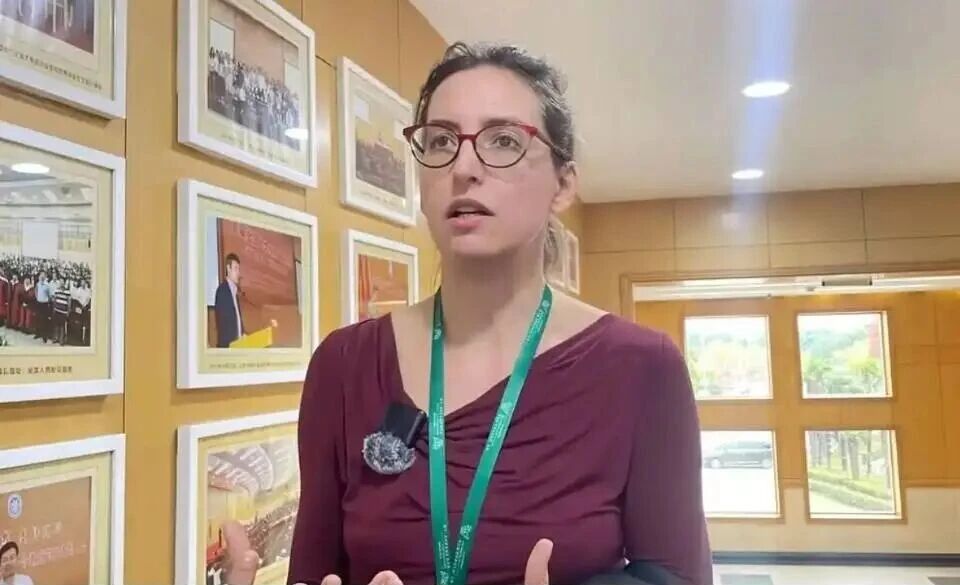
安可·海因博士(Dr. Anke Hein)现任牛津大学考古学研究所彼得·摩尔中国考古学副教授。她运用岩相学、民族志等多元研究方法,聚焦早期人类社会(主要为中国现今西部地区)的文化接触与身份认同建构。自2006年起,海因持续参与青藏高原东缘从甘肃河西走廊向南直至四川中部山区的考古发掘与调查。其关于凉山地区史前墓葬的专著,是该领域首部英文出版物之一。作为东亚考古学会会长及多个国际项目首席研究员,海因在推动中外文化交流与学术合作方面发挥着关键作用。
排版:胡雅新、郭佳鑫
一审:李 垚
二审:陈小三
三审:高大伦

学院微信公众号